
Insurance and Safety for Office Removals
When planning an office removal or commercial relocation, robust insurance cover and strict safety protocols are essential. This page explains our approach to public liability insurance, staff training, personal protective equipment and the risk assessment process for every office move. Whether you call it an office move, office relocation, corporate relocation or commercial removals project, the safety of people and protection of property are priorities from the first site visit to the final handover. Our aim is to make each business removals operation predictable, professionally controlled and fully insured against the common risks associated with moving furniture, IT equipment and archived records.Public liability insurance is the primary financial safeguard we maintain for all office moves. It covers accidental injury to third parties and damage to client premises or neighbouring properties during the relocation. For medium and large commercial removals we carry high-limit policies designed to match the scale and value of corporate relocations, including cover for stair carries, lift incidents and accidental damage while loading and unloading. We always confirm insurance levels prior to work commencing and provide evidence of cover when requested.
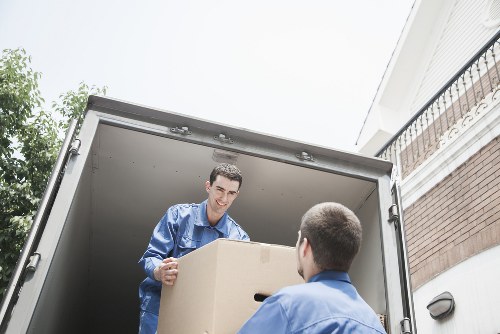 In addition to public liability, we consider other relevant covers such as employers' liability and transit insurance for high-value items. Documentation is kept on file for every office relocation and can be supplied as proof of cover. Our claims procedure is clear: in the unlikely event of an incident, we secure the scene, document the circumstances with photos and witness statements, and notify insurers promptly. This ensures that any issues arising during a business move are handled with minimal disruption and rapid resolution.
Staff Training and Competence for Safe Office Moves
All office removals rely on well-trained personnel. Our teams receive ongoing training in manual handling, secure packing of fragile IT equipment and safe operation of trolleys, ramps and tail lifts. Training programs are updated to reflect evolving health and safety standards for workplace relocations and to incorporate lessons learned from previous commercial removals projects. Competence is verified through regular assessments and supervisory checks. Training topics include:
- Manual handling techniques to reduce back injuries during heavy carries;
- Correct use of lifting equipment and trolleys to protect people and furniture;
- Secure packaging and labelling for fragile and sensitive items during an office move;
- On-site hazard recognition and communication, including coordinating with building managers for lift and fire alarm procedures.
All staff are inducted on client-specific requirements prior to mobilising on-site. Records of training, qualifications and refresher dates are maintained as part of our quality and safety management system. Supervisors carry portable checklists and ensure that each crew member understands their role and the correct use of PPE for the task at hand.
Personal Protective Equipment (PPE) and Equipment Standards
PPE is provided to protect both our teams and your property during an office relocation. Standard PPE for most business removals includes hi-vis vests, safety footwear, gloves suitable for handling paper and boxes, and protective back supports when required. For specialist tasks, additional PPE such as hard hats or eye protection may be used. Consistency in PPE use is enforced on every job to reduce the chance of slips, trips and manual handling injuries. We also maintain a rigorous equipment maintenance schedule for trolleys, lifting straps, blankets and vehicle restraints. Faulty equipment is removed from service and replaced immediately. Using well-maintained tools reduces the risk of accidents during a workplace relocation and ensures fragile items like monitors, servers and sensitive records are protected throughout transit.
 The risk assessment process begins with a comprehensive site survey and continues through planning and execution. A pre-move assessment identifies hazards such as narrow corridors, staircases, restricted access, loading bay limitations and fire escape routes. Each identified hazard is logged and assigned a control measure. Controls range from simple procedural changes (for example, scheduling moves outside peak hours) to engineering solutions (temporary ramps or protective floor coverings) to ensure a safe office move.
Risk assessments are documented and communicated to all stakeholders involved in the commercial removals. We produce a move plan that outlines responsibilities, timings, and contingency measures for issues like lift outages or unexpected heavy items. The plan includes emergency procedures and a clear chain of command so everyone knows who to contact if a safety issue arises during an office relocation.
For complex corporate relocation projects we perform additional assessments that consider IT disconnection/reconnection, data cabinet movement, and secure handling of confidential archives. Our approach uses hierarchies of control to eliminate hazards where possible, substitute safer options, introduce engineering controls and, where necessary, rely on administrative controls and PPE to reduce residual risk.
In summary, effective insurance, rigorous staff training, correct PPE and a structured risk assessment process combine to create a comprehensive safety framework for any office removals project. By integrating these elements, we deliver professional, reliable and safe office moves that protect people, preserve assets and minimise business disruption throughout the relocation process.